The Contentment of a Horse

One of my favorite college professors used to say, “It’s hard to be grumpy when you are grateful.”
Think about it. It is often much easier to choose grumpiness than it is to choose gratitude. And as we enter the upcoming holiday season, there are plenty of opportunities to compare ourselves with everyone around us—friends, family, neighbors, coworkers, and even complete strangers on social media.
“My flannel-wearing friend looks so cute in their fall photos, while I feel like a lumberjack who misplaced my axe.”
“My coworker is hosting her husband’s entire extended family for Thanksgiving, but we are just celebrating with a small group of friends.”
“My neighbor just put up their nine-foot-tall Christmas tree, but we only have an eight-footer.” (Even putting up your Christmas tree already is an absolute crime. Christmas comes AFTER Thanksgiving!)
All joking aside, our tendency as sinful humans is to focus on what we don't have. We look at the lives of those around us and begin to believe that their circumstances, possessions, relationships, or opportunities are somehow better than our own. Before long, comparison steals our joy, and we find ourselves grumbling about what we find “lacking” instead of being grateful for what God has already provided.
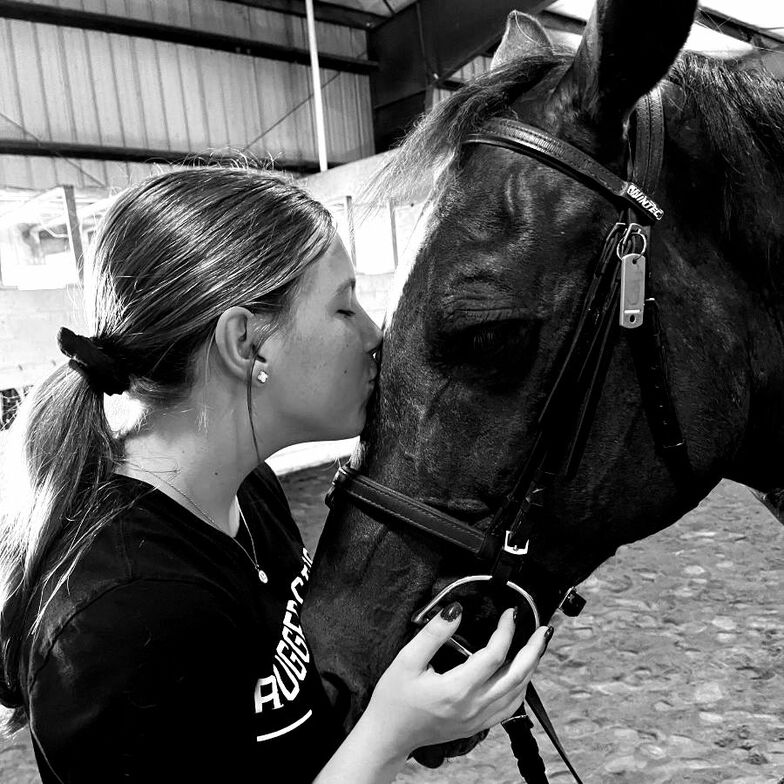
But have you ever watched a well-cared-for horse in the pasture?
Horses don't spend their days wishing they had the newest saddle, the prettiest winter coat, or a matching show outfit; rather, a horse is content with a full belly, fresh water, and a comfortable place to rest.
A horse doesn't lie awake wondering whether the pasture next door has greener grass or whether another horse has a nicer stall. It doesn't have to worry about where tomorrow's hay will come from. It simply trusts that its owner will provide what it needs each day and can rest in the provision of the one who cares for it.
What if we approached our relationship with God in a similar way?
In Philippians 4:11–13, Paul writes, “Not that I am speaking of being in need, for I have learned, in whatever situation I am, to be content. I know how to be brought low, and I know how to abound. In any and every circumstance, I have learned the secret of facing plenty and hunger, abundance and need. I can do all things through Christ who strengthens me.”
Paul had discovered that his contentment wasn't dependent on what he had or what was happening around him. Why? His strength and sufficiency came from Christ.
Contentment doesn't mean we never have desires, hopes, or difficult circumstances. It means we learn to trust God in the middle of them. We recognize that our Heavenly Father knows our needs and is faithful to provide for us. We don't have to spend our days looking over the fence at someone else's pasture, wondering why their grass looks greener because God has already given us so much. He has provided for us, loved us, shown us grace, and offered us the greatest gift of all through His Son, Jesus Christ.
We have countless reasons to be thankful!
So, as we enter this season of thanksgiving, let's take a lesson from our four-legged friends. Instead of focusing on what we lack, let's learn to recognize and appreciate the tremendous gift of grace we have received. Instead of comparing our pasture to someone else's, let's thank God for the one where He has planted us and trust Him for all our needs.